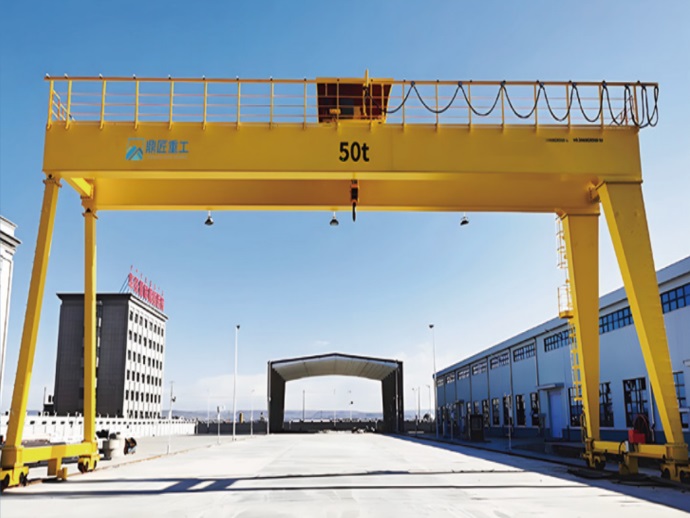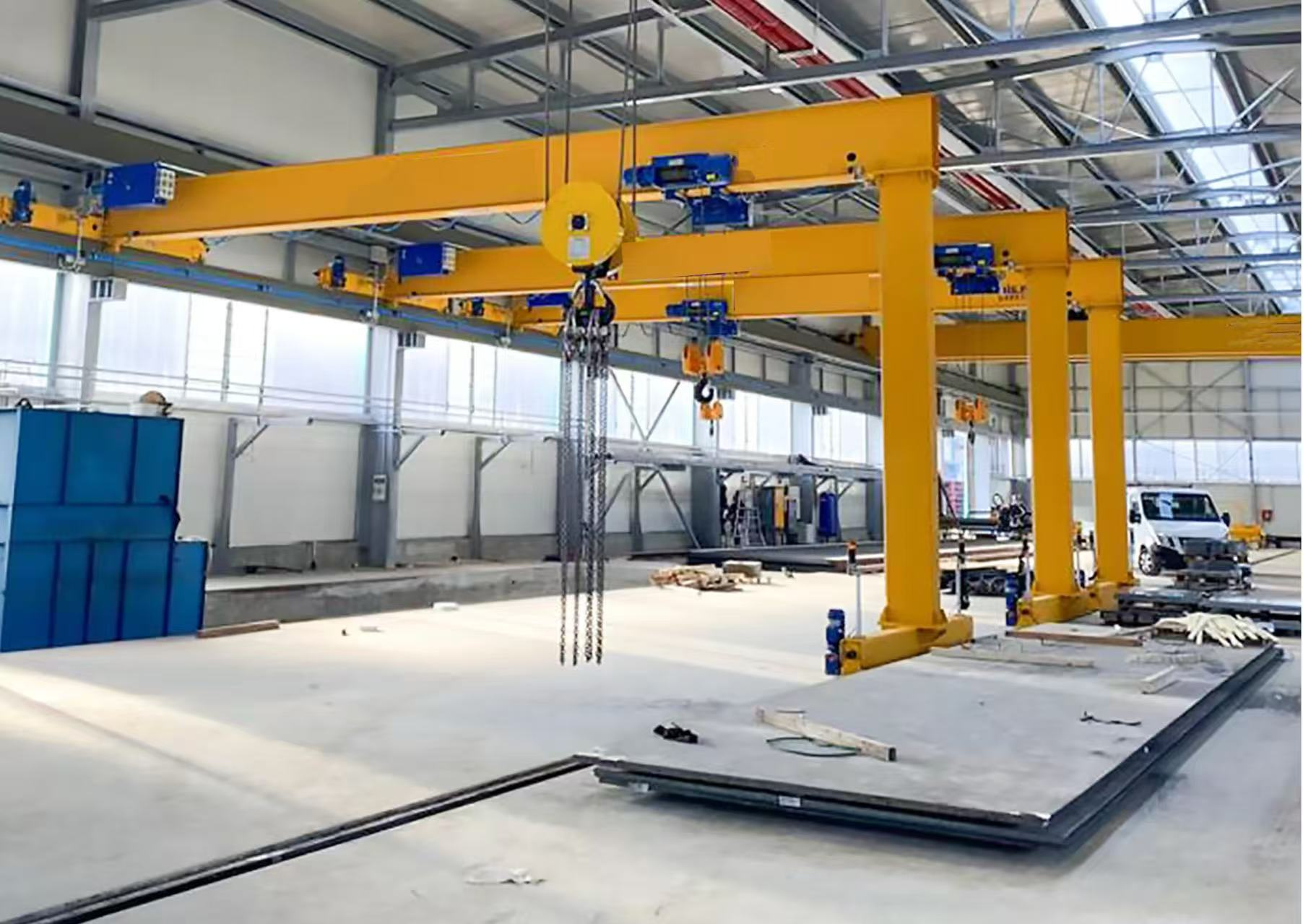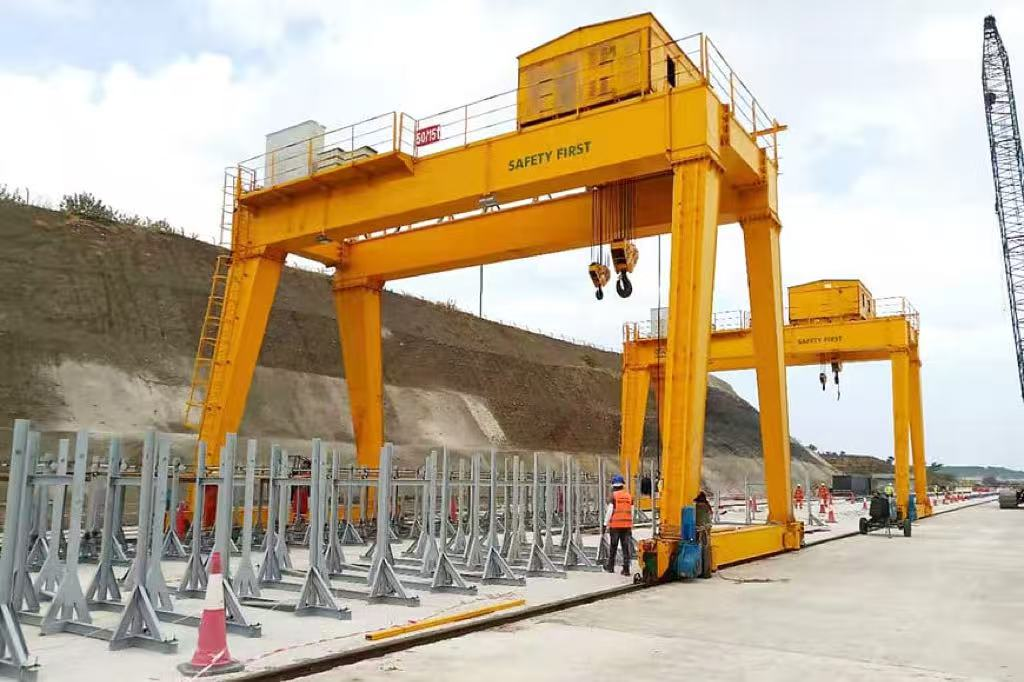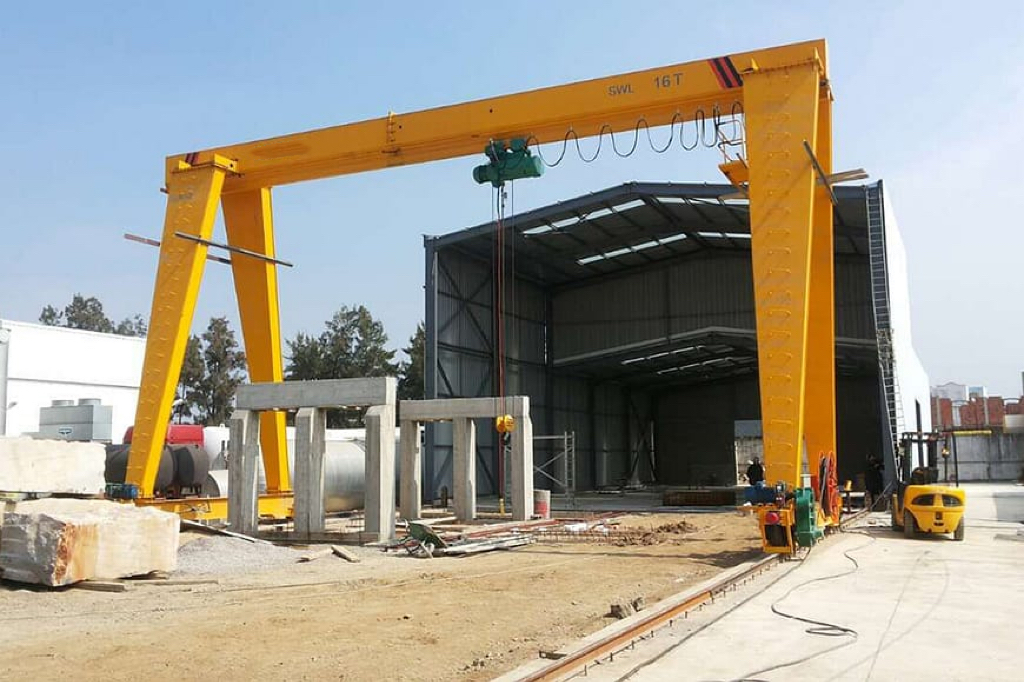
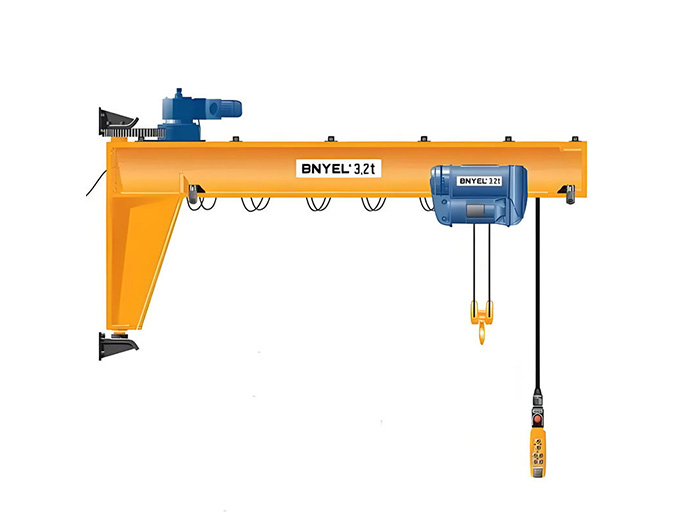
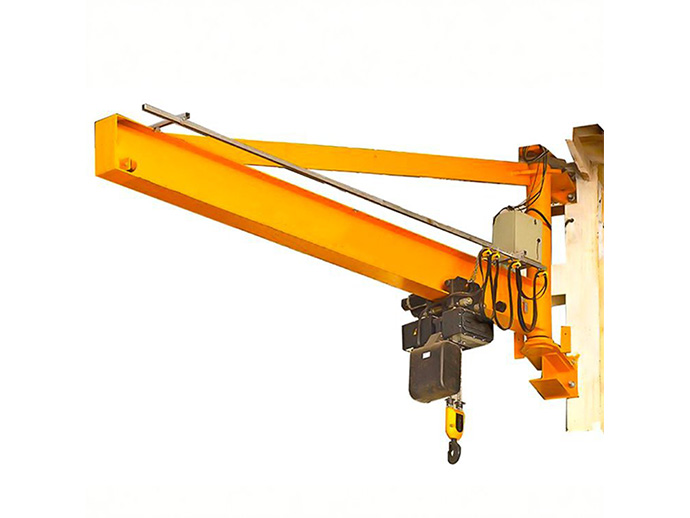
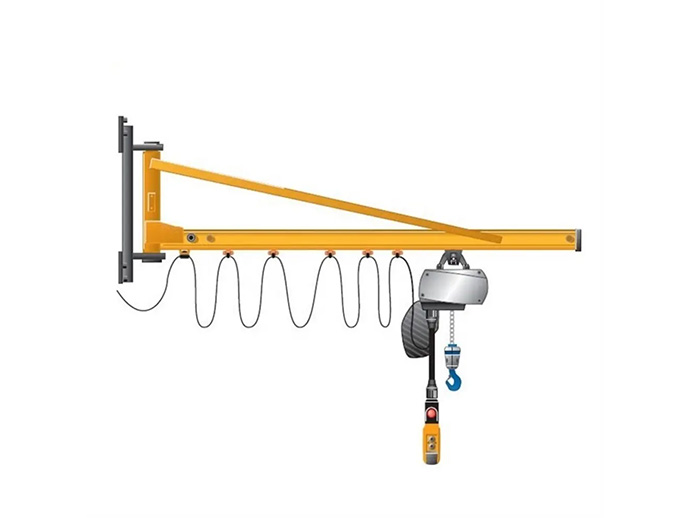
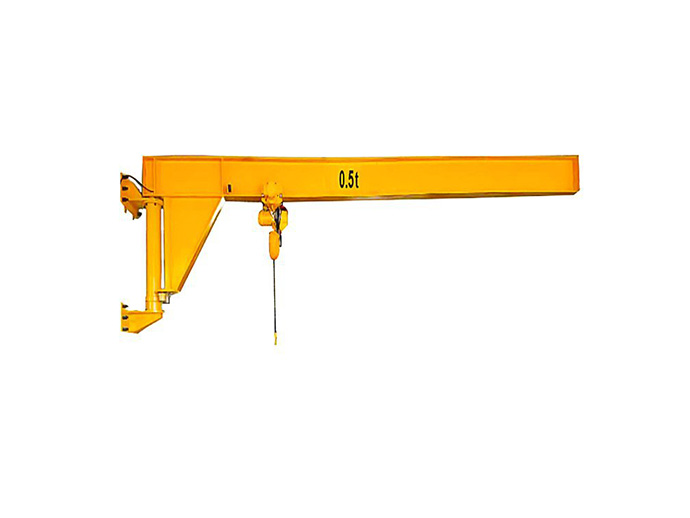
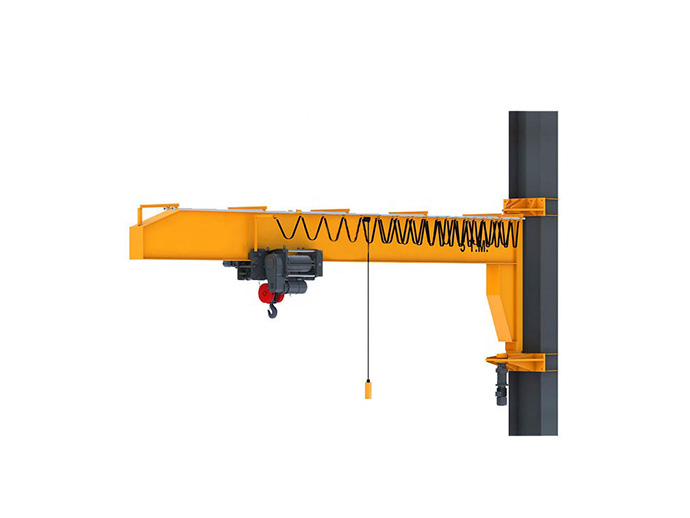
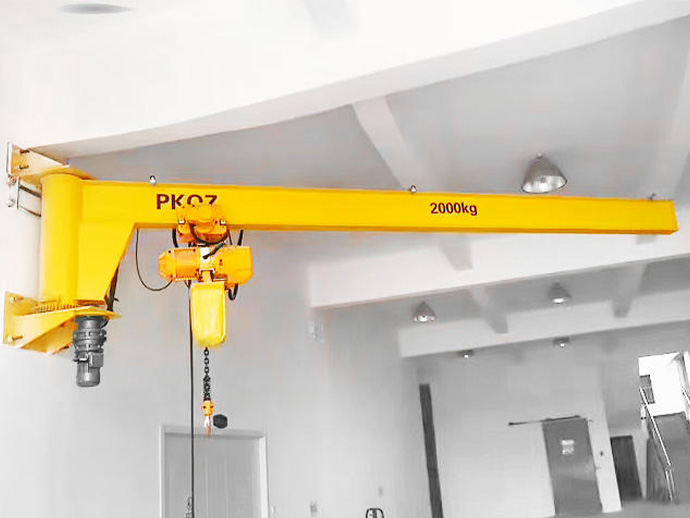
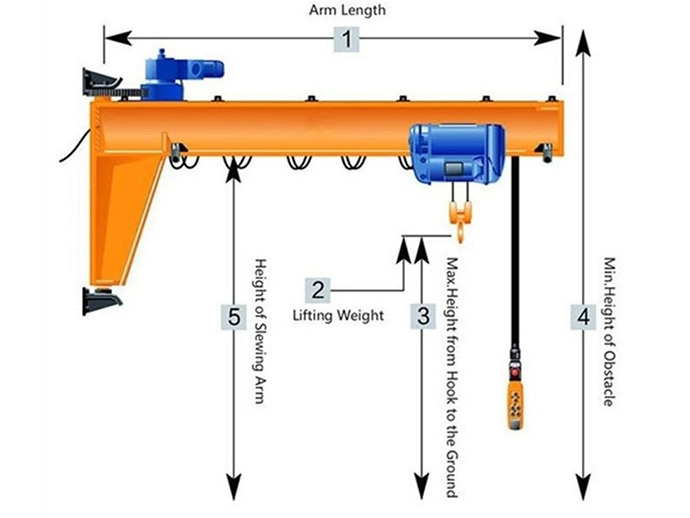
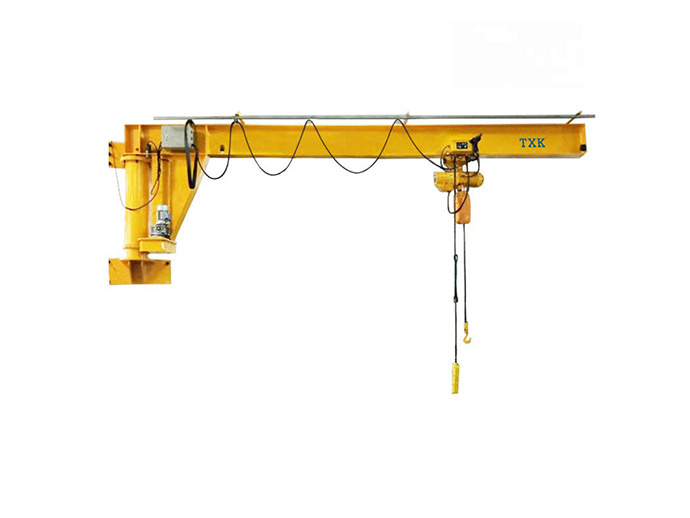
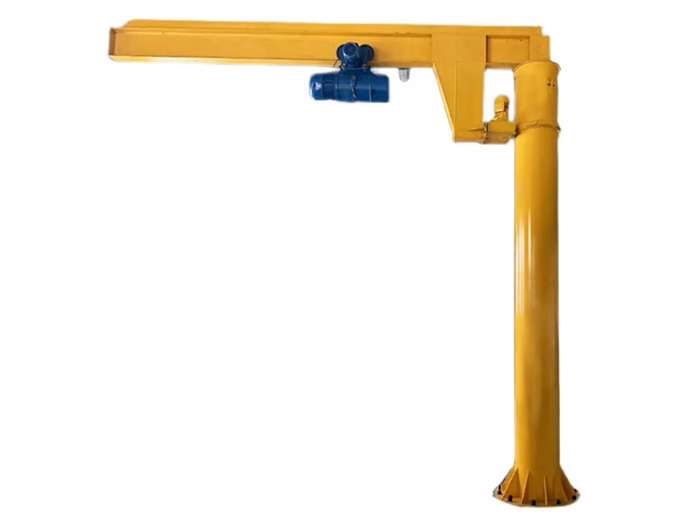
Structure
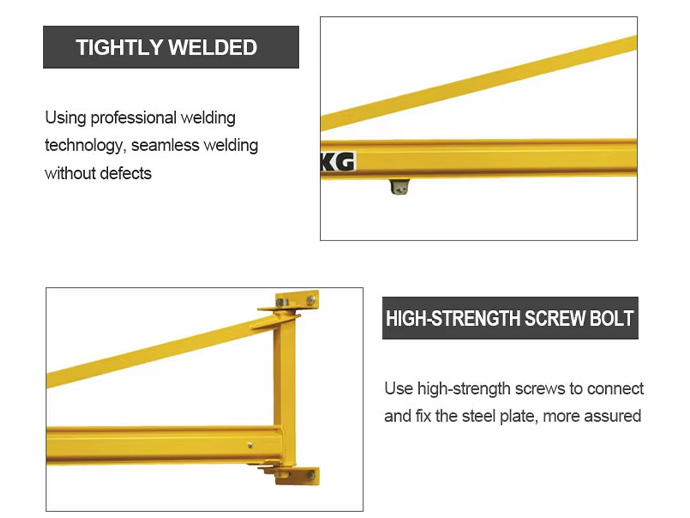
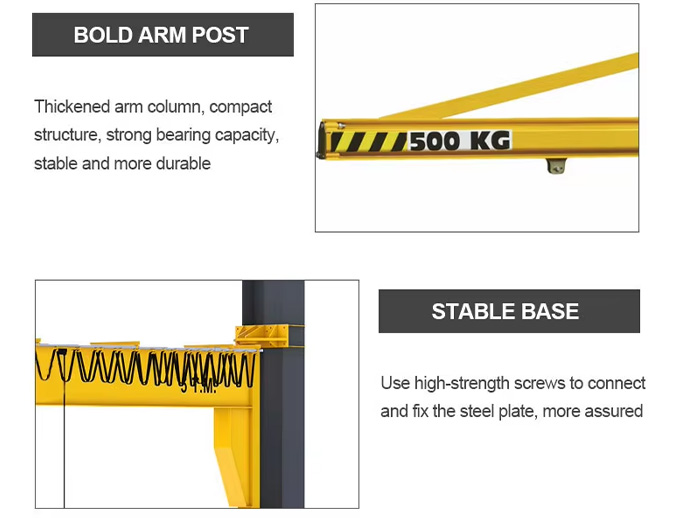
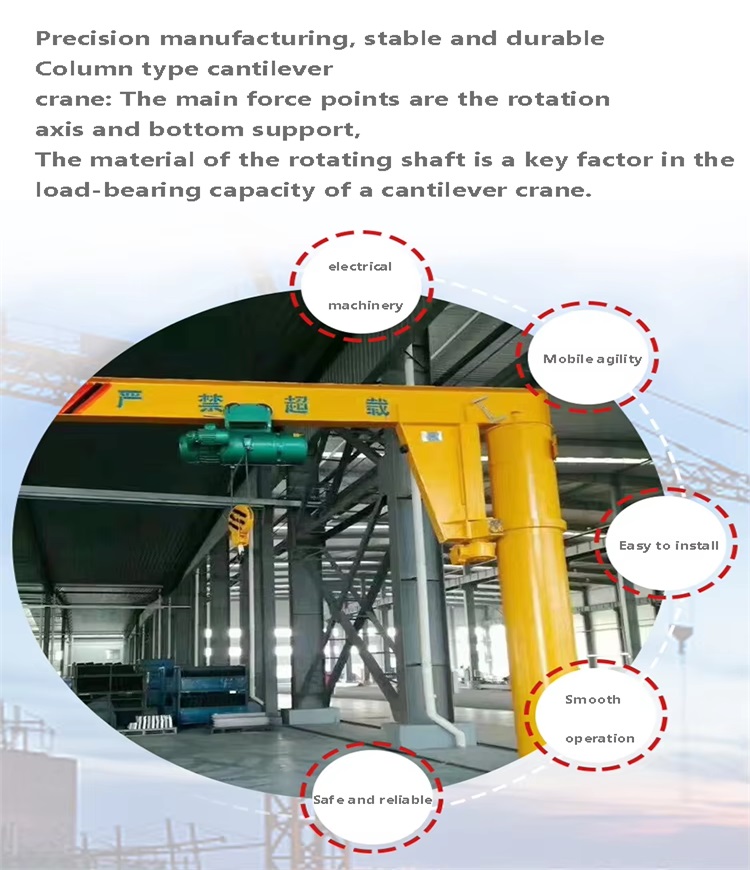
Advantages
Space-Saving Design & Optimal Maneuverability
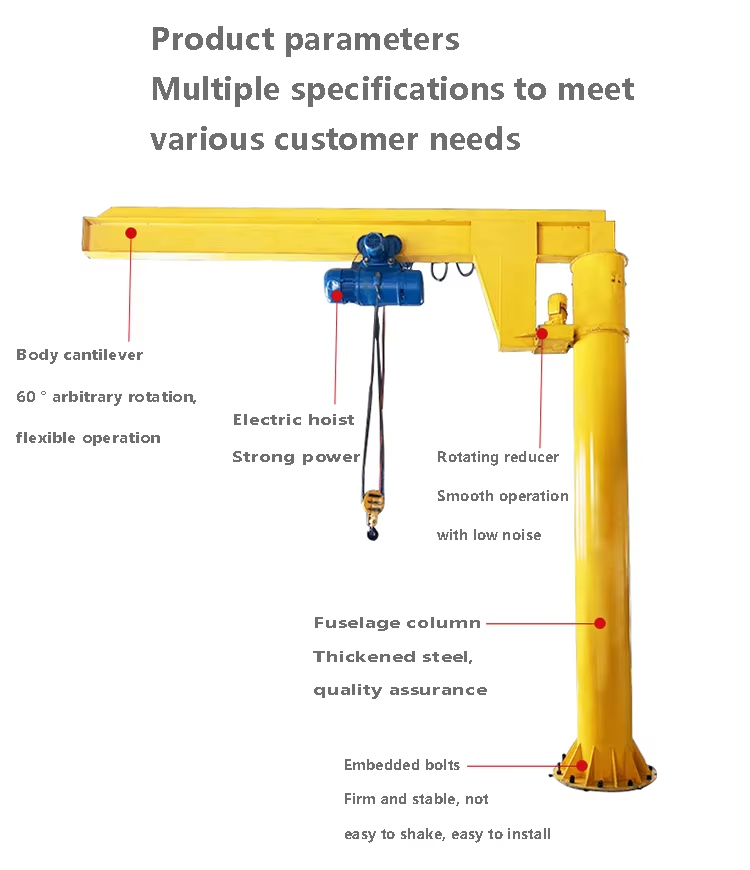
Cantilever cranes excel in environments with limited floor space due to their compact and versatile structure. Unlike traditional
overhead cranes requiring extensive runway systems, wall-mounted or freestanding cantilever designs utilize vertical support
columns or building structures, freeing up valuable floor area. The horizontal jib (boom) provides extended reach without central
obstructions, enabling precise load placement around obstacles. This makes them ideal for workshops, production lines, or
warehouses where space constraints prohibit larger crane systems. Their ability to rotate up to 360° (depending on model) further
enhances operational flexibility in tight spaces.
Enhanced Precision & Control for Delicate Operations
Cantilever cranes offer superior load-handling accuracy, critical for delicate or repetitive tasks. The jib’s rigid construction
minimizes sway during lifting, ensuring stable positioning of sensitive loads (e.g., machinery components, glass panels, or
assembly parts). Many models incorporate smooth manual or electric hoists with variable speed controls, allowing operators to
adjust lifting motions with millimeter-level precision. This reduces product damage risks and improves workflow efficiency in
industries like automotive manufacturing, aerospace, or precision engineering, where alignment and safety are paramount.
Durability & Adaptability to Harsh Conditions
Engineered for rugged industrial use, cantilever cranes are built with high-grade materials (e.g., reinforced steel) and
corrosion-resistant coatings, ensuring longevity in demanding environments like foundries, shipyards, or outdoor storage yards.
Their modular designs allow customization—adjustable jib lengths, overload protection systems, and weatherproof variants cater to
specific operational needs. Unlike full-gantry cranes, cantilever models require minimal foundation work and can be retrofitted
into existing facilities with lower installation costs. This adaptability makes them a cost-effective, low-maintenance solution
for heavy-duty or high-cycle applications.
Specification

Applications
It’s economy and satety are especially obvious in the lifting of turbine turbine units above 140m